
Coffee Origins

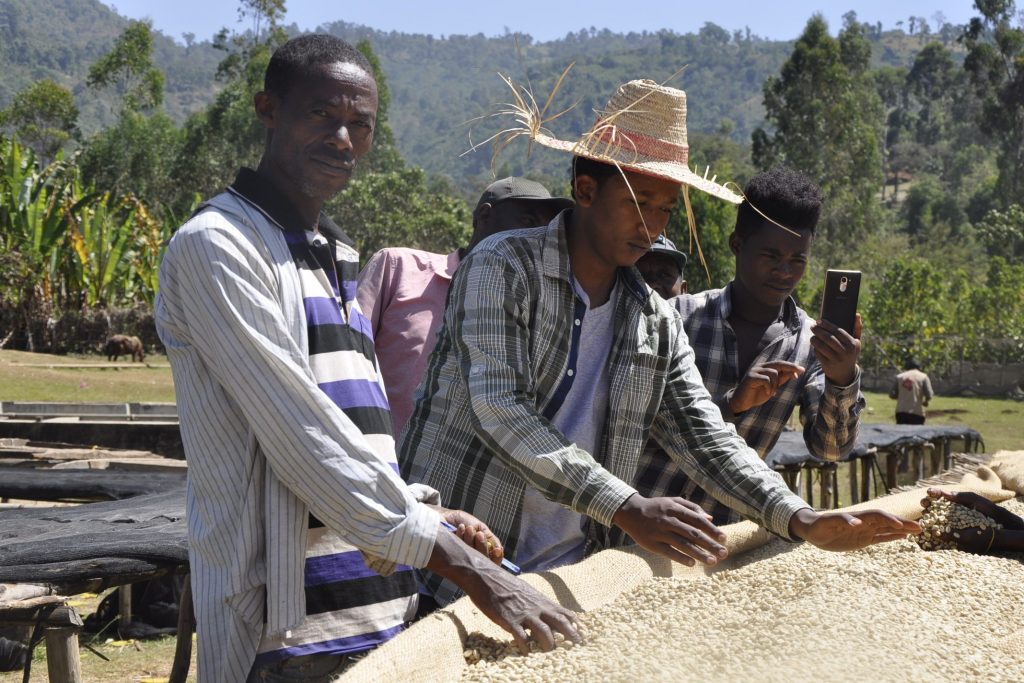
Farmers checking parchment coffee on raised drying beds

Limmu coffee

Coffee Origins Limmu Coffee Ethiopia has a wide variety of Arabica coffee beans. Limmu is not the best known, but it produces excellent coffee. Where Limmu Coffee Comes From Limmu coffee originates from the southwestern parts of Ethiopia, in the Oromia Region. These coffees are grown at altitudes of up to 2,000 meters above sea level. They show a cup profile with a medium body and flavor notes of wine and fruit, with sharp, citric-like acidity and a clean finish. Ripe Arabica cherries: the starting point for a clean, fruit-toned cup. Limmu Cup Profile Acidity: Low but sharp Body: Well balanced Bean color: Greenish Aroma: Mixed berries, spice, cocoa Flavor: Chocolate, spicy, pleasantly sweet with floral overtones Bean: Medium in size with a distinctive rounded shape The Rise of Washed Limmu Coffee Washed Limmu coffees are a moderately recent phenomenon in the Ethiopian coffee market. Down the generations, coffees in these areas were produced as sun-dried coffees. To protect final quality and consistency, washing these coffees was introduced and has been popularized successfully in relatively recent years. Before the Washing Stations Before cooperatively owned washing stations began on a large scale, farmers would dry their coffee on the ground and store it in their houses until they needed money. At that moment, the producer would bring the dried cherry to a buying station and receive the little money they needed. The issue was that these coffees earned the farmer lower prices, due to the lower quality of what was known as Jimma coffees. After the Washing Stations As cooperatives opened washing stations, the coffees started earning a higher income for farmers right away. Quality improved, and better prices for the farmers followed. Washing stations helped raise quality and prices for Ethiopian coffee farmers. “The rise of Washed Limmu coffees presented a new region of premium coffees for the specialty roaster to explore.” It also introduced a newly afforded livelihood for producers in Western Ethiopia. Explore Ethiopia’s Coffee Regions From our own washing stations in Sidama, Yirgacheffe, and Guji, we follow every lot from ripe cherry to export. Explore our single origin coffees, or tell us what you are looking for and we will keep you close to the season. Explore Our Coffees → Start a Conversation
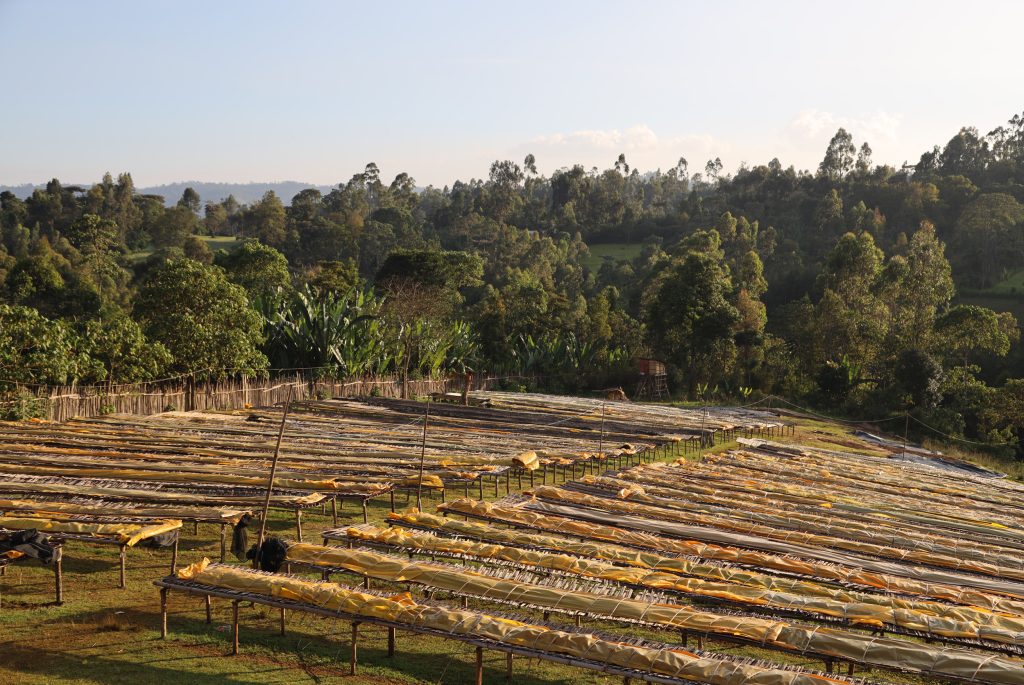
Bochesa coffee drying station in Sidama, Ethiopia

Sidamo Coffee

Coffee Origins Sidamo Coffee Sidama Zone is located in Southern Ethiopia, where some of the finest coffee in the world grows. It is the country’s leading coffee-producing zone and its largest supplier of washed coffee. Sidama at a Glance Altitude: up to 1,550–2,200 MASL Processing: produced washed and, exceptionally, natural (unwashed) Cup: fine acidity, medium body, spicy notes Beans: small to medium in size, greenish Use: blended for gourmet or specialty coffee Sidama, in Southern Ethiopia, where finest coffee grows. Where Sidama Is Sidama Zone is a zone in the Southern Nations, Nationalities, and Peoples’ Region (SNNPR) of Ethiopia. It is named for the Sidama people, whose homeland is in the zone. Sidama is bordered on the south by the Oromia Region (except for a short stretch in the middle where it shares a border with the Gedeo zone), on the west by the Bilate River, which separates it from the Wolayita zone, and on the north and east by the Oromia Region. Towns in Sidama include Hawassa, the capital of Sidama and SNNPRS, Yirgalem, and Wendo. Sidama has a population of around 3.2 million (2017), who speak the Cushitic language Sidama, also known as Sidamigna. Geographic details adapted from Wikipedia. Garden Coffee and World-Class Washed Coffee Sidama coffee is mainly produced in Sidama zone, but it also includes coffee produced in the neighboring zones of Amaro, Guji, Borena, Bale, Wolayita, Kambata, Gamo Gofa, and South Omo. Sidama zone is the leading coffee-producing zone and the largest supplier of washed coffee in the country. “Sidama coffee is known for its high quality across the world and has built a reputation over many decades.” Sidama is well known for its production of garden (cottage) coffee, grown in gardens and fertilized with organic nutrients. It produces world-class washed coffee thanks to its ideal soil type, climate, altitude, rainfall, and temperature for high quality coffee. Coffee is planted at low densities, ranging from 1,000 to 1,800 trees per hectare, and is often intercropped with enset (false banana). Garden coffee, grown in gardens and fertilized with organic nutrients. The Sidama Cup Sidama coffee is a low-yielding variety with the highest cup quality. The beans are small to medium in size and greenish-gray in color. The cup has a balanced taste and fine flavor with distinct sweetness, fine acidity, and good body, and it is always sold as specialty coffee. Traceable Information Origin: Ethiopia, Southern Nations and Nationalities Region, Sidama zone and other neighboring zones. Sidama Grades by Area Sidama A: Benesa, Chire, Bona Zuria, Arrpressa, and Arbigona Sidama B: Aleta Wendo, Dale, Chuko, Dara, Shebedino, Wensho, Loko Abaya, Amaro, and Dilla Zuria Sidama C: Wolliata, Kembata, and Timbaro Sidama D: Bale, Chole, and Nansebo Sidama E: South Ari, North Ari, Melo, Denba Gofa, Geze Gofa, Arbaminch Zuria, Basketo, Derashe, Konso, Konta, Gena Bosa, and Esera Coffee Details Variety: Indigenous Ethiopian Arabica Altitude: 1,500–2,100 MASL Processing: Washed and natural Harvesting method: Hand picking Harvest season: September–December Export season: January–August Taste Sidama at Its Source From our own washing stations in Sidama, we follow every lot from ripe cherry to export. Explore our single origin coffees, or tell us what you are looking for and we will keep you close to the season. Explore Our Coffees → Start a Conversation
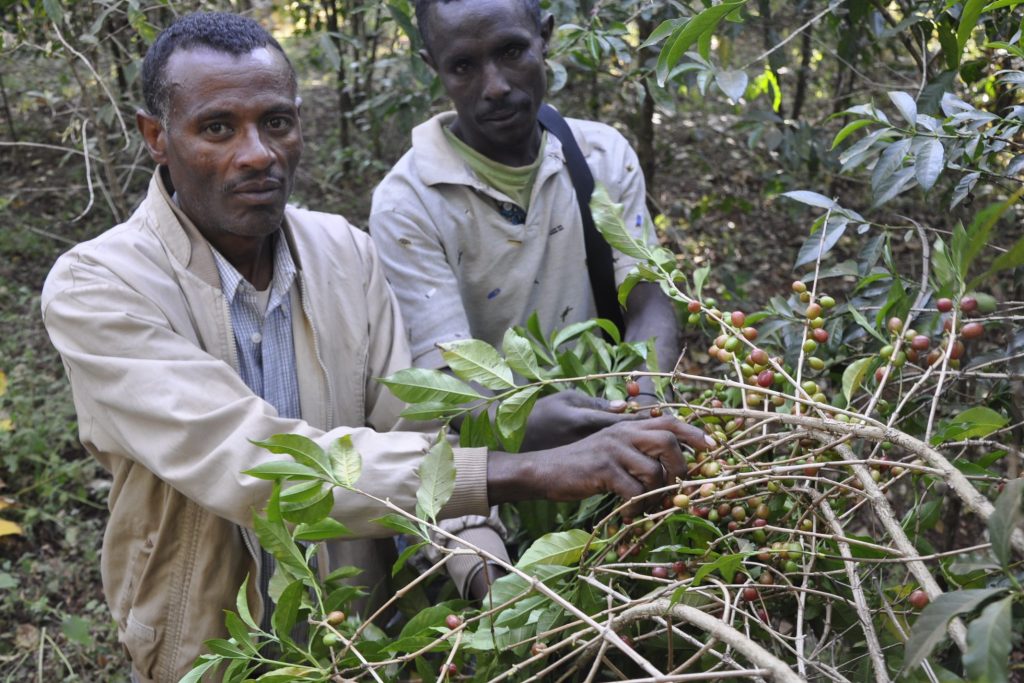
Farmers picking coffee cherries among the coffee trees

Guji Coffee

Coffee Origins Guji Coffee Guji coffee has been receiving a lot of attention from the specialty coffee world in recent years, and for good reason. Where Guji Is Guji is one of the zones of the Oromia Region of Ethiopia. It is named after a tribe of the Oromo people. Guji is bordered on the south by Borena, on the west by the Southern Nations, Nationalities, and Peoples Region, on the north by the Ganale Dorya River, which separates it from Bale, and on the east by the Somali Region. The highest point in the zone is Mount Dara Tiniro, and its administrative center is Negele Borana. The Guji Zone was created in 2002, when the upland woredas of the Borena Zone were split apart to create it. Before that year, Guji territory was part of the Borena zone. Guji also shares a border with the SNNP Region, which includes the Gedeo Zone (where Yirgacheffe is located) and the Sidama Zone. Geographic details adapted from Wikipedia. Guji, in the Oromia Region, sits close to Yirgacheffe. A Rising Name in Specialty Coffee “Guji coffee has been receiving a lot of attention from the specialty coffee world.” Many privately owned washing stations have sprung up recently in an area that has traditionally processed coffee using the natural (dry) method. The quality of these washed coffees can be outstanding, which isn’t surprising considering the area’s close proximity to Yirgacheffe. “Close” is relative when it comes to travel in Ethiopia, where 100 km can mean a 10-hour drive, but the variety of terrain and culture in that short distance is incredible. The Guji Cup: A Huge Diversity of Profiles Despite being near Yirgacheffe as the crow flies, we have seen a huge diversity of coffee profiles from Guji. Washed Guji Washed lots range from the sweet lemon candy and floral tea you might expect from the area to heavy green melon, peach, and rose flavors. Natural Guji The natural coffees from Guji can also be spectacular when cared for well, bringing: Syrupy fruit Marmalade Rosé wine Perfumed aromatics From floral tea to marmalade, Guji offers remarkable range. Taste Guji at Its Source From our own washing stations in Guji, Sidama, and Yirgacheffe, we follow every lot from ripe cherry to export. Explore our single origin coffees, or tell us what you are looking for and we will keep you close to the season. Explore Our Coffees → Start a Conversation

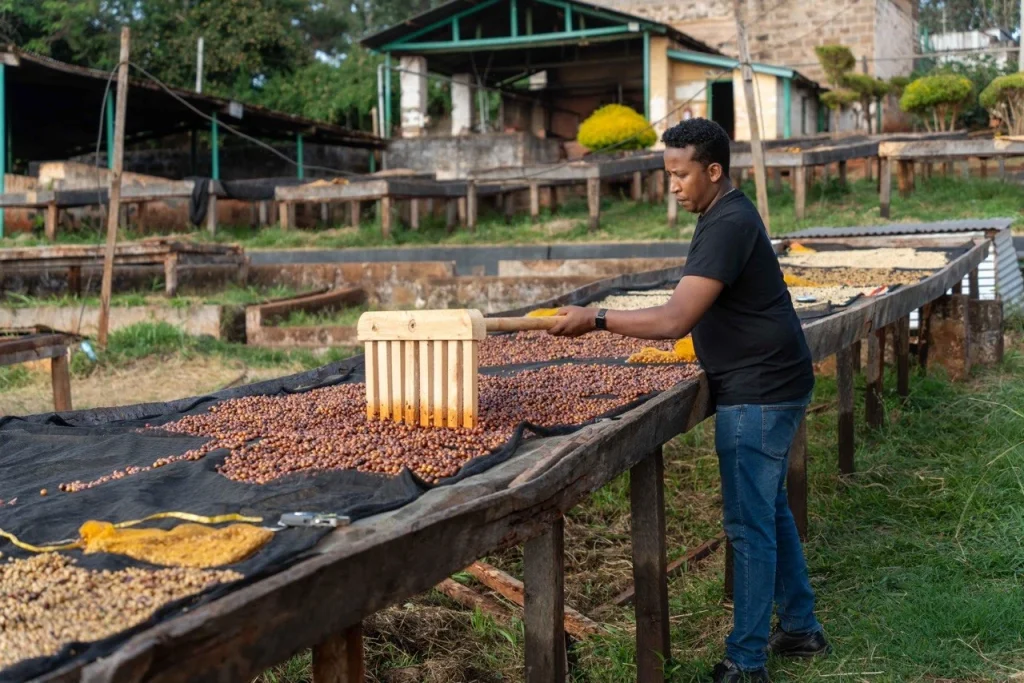
Raking coffee on raised African drying beds

Yirgacheffe Coffee

Coffee Origins Yirgacheffe Coffee Washed, best highland-grown coffee, recognized for its distinct district character and set apart by exceptional citrus and floral flavor. Yirgacheffe at a Glance Recognized as: a district character flavor, set apart for exceptional citrus and floral notes Acidity: fine Cup: bright acidity, medium body Altitude: 1,770–2,200 m Raw bean: uniform, thick, medium to bold, oval in shape, and compact Yirgacheffe: steep, green, fertile, and high. About the Yirgacheffe Region Yirgacheffe is part of the Sidamo region in southern Ethiopia. Its exquisite washed coffees are so well known that it has been sub-divided into its own micro-region. This steep, green area is both fertile and high, and much of the coffee grows at 2,000 m and above. “Its exquisite washed coffees are so well known that it has been sub-divided into its own micro-region.” At first glance, Yirgacheffe’s hills look thickly forested. In fact it is a heavily populated region, and the hills are dotted with many dwellings and villages growing what is known as “garden coffee.” The numbers give a sense of scale: Approximately 26 cooperatives in the region Some 43,794 farmers represented Around 62,004 hectares of garden coffee Production is predominantly washed, although a smaller amount of sun-dried coffee also comes out of Yirgacheffe. Garden Coffee and Rural Life Around 85 percent of Ethiopians still live rurally and make a living from agriculture. Each family usually lives in a modest home, often a single round mud hut, and farms its own plot of land, growing both cash crops and food for its own consumption. In Yirgacheffe, coffee is one of the main cash crops, covering anywhere from half a hectare to 1.5 hectares (the latter is considered big). It is usually planted alongside a second crop: “false banana” (enset), a large-leafed tree used in making roofs that also provides shade for the coffee. Garden coffee grows alongside false banana, which provides shade. False banana looks like a banana tree but isn’t. Its thick stem is used to produce both a nutritious flour and a fermented paste that are staple ingredients, particularly across southern Ethiopia. Harvest and Processing There is only one main harvest a year in Ethiopia, usually in November and December across all of the country’s growing regions. On average, 4 passes are made during the harvest period, and in regions that produce both washed and natural coffees, the last pass is used for the natural coffee. Natural coffee. Photo credit: Heleph. How Washed Coffee Is Made Washed coffees are generally pulped on the same day they are picked, usually in the evening or at night. They are then: Sorted into three grades by weight: heavy, medium, and floaters. Fermented, with times that vary, usually between 16 and 48 hours. Washed, and usually graded again in the washing channels. Dried on African beds, where the beans are hand-sorted, usually by women. Taste Yirgacheffe at Its Source From our own washing stations in Yirgacheffe, Sidama, and Guji, we follow every lot from ripe cherry to export. Explore our single origin coffees, or tell us what you are looking for and we will keep you close to the season. Explore Our Coffees → Start a Conversation