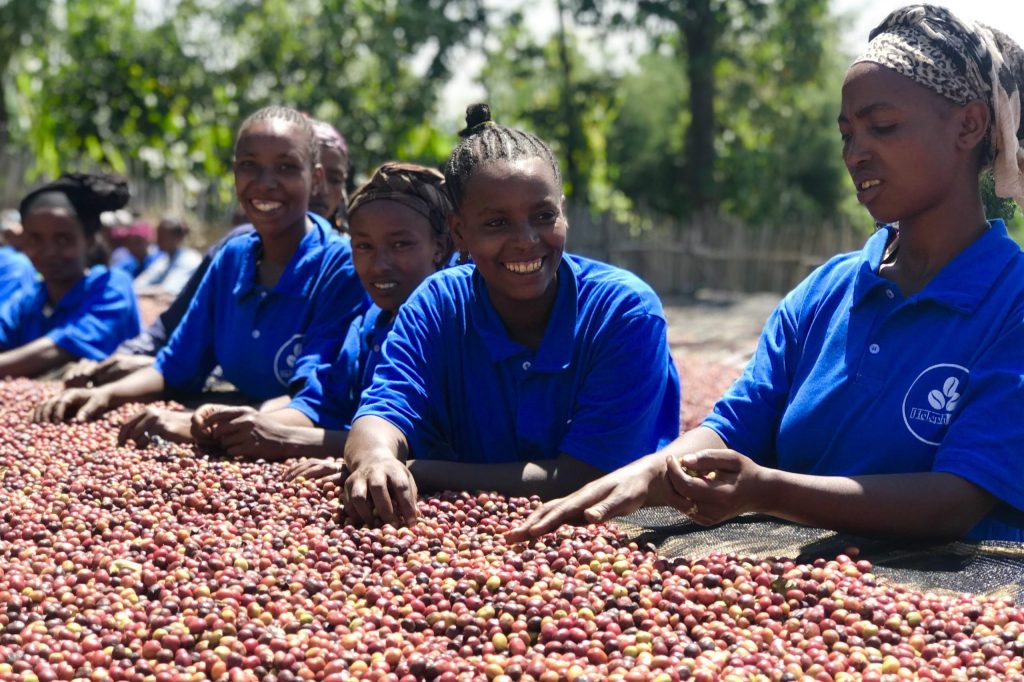

Ethiopian Coffee – Single Origin & Traceability
Ethiopia, popularly known as the birthplace of Arabica Coffee, today accounts for 3 % of the coffee grown worldwide. The main coffee growing regions are Lekempt, Jimma, Limmu, Sidamo, and Yirgacheffe. It is quite interesting to note that more than 70% of the Ethiopian population consists of farmers. Forest, Semi-Forest, Garden and Plantation Coffees are the three main production systems that have contributed to the growth of the coffee industry in Ethiopia. Generally, coffee beans are harvested from November to February every year. Research studies suggest that Ethiopia’s annual Arabica production is projected to increase from 420 thousand tons in 2014/15 to 1103 thousand tons by 2019/20, of which 4.5 million small landholder farmers produce the highest i.e., 95%. Favourable topography, low disease and pest pressure, ample rainfall in coffee-growing areas are some of the key factors that influence the quality of Ethiopian Coffee beans. Coffee Gateway to the Middle East, US & Europe Ethiopia’s geographical positioning, sharing land borders with Djibouti (the main shipping port) makes it the gateway to the rest of the Middle East and the Western world. Today, Ethiopia is the largest coffee exporter in East Africa. Coffee accounts for 27-31% of the total commodity exports of the country. Single origin specialty coffee is the most sought after range due to its distinctive taste and quality. In the year 2018/19, Ethiopia exported 47,519 metric tons of coffee to Saudi Arabia, 42,215 MT to Germany, 33,824 MT to Japan, 24,080 MT to USA, 17,921 MT to Belgium and 13,059 MT to Sudan. According to experts, domestic coffee consumption in 2019/20 is estimated to be 3.14 million bags (188,400 metric tons), 50,000 bags less than in 2018/19. This decline may be attributed to social distancing measures put in place in response to COVID-19, which has resulted in lower domestic consumption at informal outdoor coffee stands. Post pandemic, Ethiopia coffee consumption in MY 2020/21 will reach 3.4 million bags, an increase of 260,000 bags (15,600 metric tons) over the 2019/20 estimate. It is estimated that the consumption levels will return to normal in 2021. Innovative Coffee Traceability System In 2015, the IBM-enabled system was first introduced as a pilot project in the Ethiopian coffee industry and is successfully being implemented till date with the aim of increasing global exports of high-quality Ethiopian coffee. The unique system, known as eATTS helps trace the origins of Ethiopian beans right from picking until processing and packing. The innovative coffee traceability system is not only beneficial for international buyers and coffee-roasters, but it even encourages Ethiopian smallholder farmers to use cultivation and harvesting best practices. The Ethiopia Commodity Exchange (ECX) classifies all the coffee exported from Ethiopia. In addition to this, the Ethiopian Coffee and Tea Marketing and Development Authority together with Coffee Quality Inspection Center certify all coffee exported from Ethiopia. Excerpts of the interview with Mr.Tsegab Ayele, General Manager – Heleph Coffee Export 1.What makes Ethiopian coffee unique? Ethiopian coffee has complex flavors and is traceable back to the ground. The Coffee Arabica produced in Ethiopia is cultivated at very high altitudes between 1900 to 2400 ft above sea-level. Our coffee plants are free from pesticides and harmful fertilizers, instead, we make sure to use only organic compost. These factors make Ethiopian coffee priceless. 2. How much coffee do Ethiopians drink on an average? We drink as much as 5 cups or more per day, which means more than 60% of the coffee produced is consumed locally. Coffee is an important part of Ethiopian culture. We have a unique coffee ceremony which involves roasting coffee beans and preparing boiled coffee in a vessel called Jebena. The coffee ceremony is considered to be the most important social occasion in many households. 3. As an exporter of coffee what are the main challenges you face in the market? Delays in harvest due to unfavorable weather conditions is one of the main challenges faced by us. Secondly, the presence of middlemen in coffee value-chain is affecting prices in the market. 4. What is the effect of the current Coronavirus Covid-19 pandemic on the coffee industry in Ethiopia? The Covid-19 pandemic has negatively affected the coffee industry for nearly 2 months. Delay in coffee processing due to nationwide lockdown and at the supply chain system led to a pause in our domestic and export business. However, the Ethiopian government is supportive and hope the situation will improve soon. Shruti Arun