
Market & Export

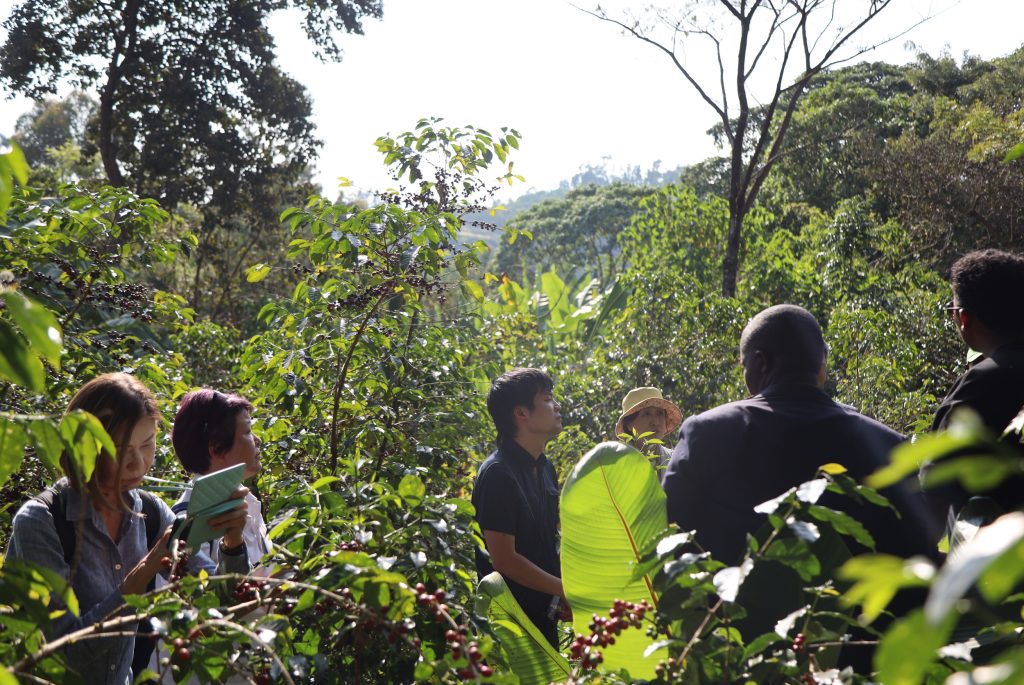
Visitors walking through shade-grown coffee forest in Ethiopia

Heleph Coffee Company grew in response to global pressure

Our Story Heleph Coffee Company Grew in Response to Global Pressure Coffee is Ethiopia’s natural resource, a major source of export income that has topped the country’s export trade for a long time, and one strongly linked with the socioeconomic values of its people for many years. Ethiopia’s Natural Resource Coffee has long been a major source of export income for Ethiopia and has topped the country’s export trade for a long time. It is also strongly linked with the socioeconomic values of the people, and has been for many years. However, the country has not adequately benefited from the sector, for various reasons. Coffee is Ethiopia’s natural resource and a cornerstone of its export income. Coffee in Everyday Ethiopian Life “Over twenty-five percent of Ethiopian communities’ livelihood expenses are covered by coffee.” The numbers show how deeply coffee is woven into daily life: Over 25% of Ethiopian communities’ livelihood expenses are covered by coffee. About 50% of the nation’s coffee production is consumed locally, affirming the strong relationship between coffee and the communities’ daily life. Likewise, it is well known that Ethiopia is the origin of Arabica coffee and its biogenetic diversity. It is also the country’s first famous export. Explore the regions behind our coffees: Sidama, Yirgacheffe, and Guji. Coffee is woven into daily life and livelihoods across Ethiopia’s growing regions. Source From the Origin of Arabica From our own washing stations in Sidama, Yirgacheffe, and Guji, we follow every lot from ripe cherry to export. Explore our coffees, or tell us what you are looking for and we will keep you close to the season. Explore Our Coffees → Start a Conversation
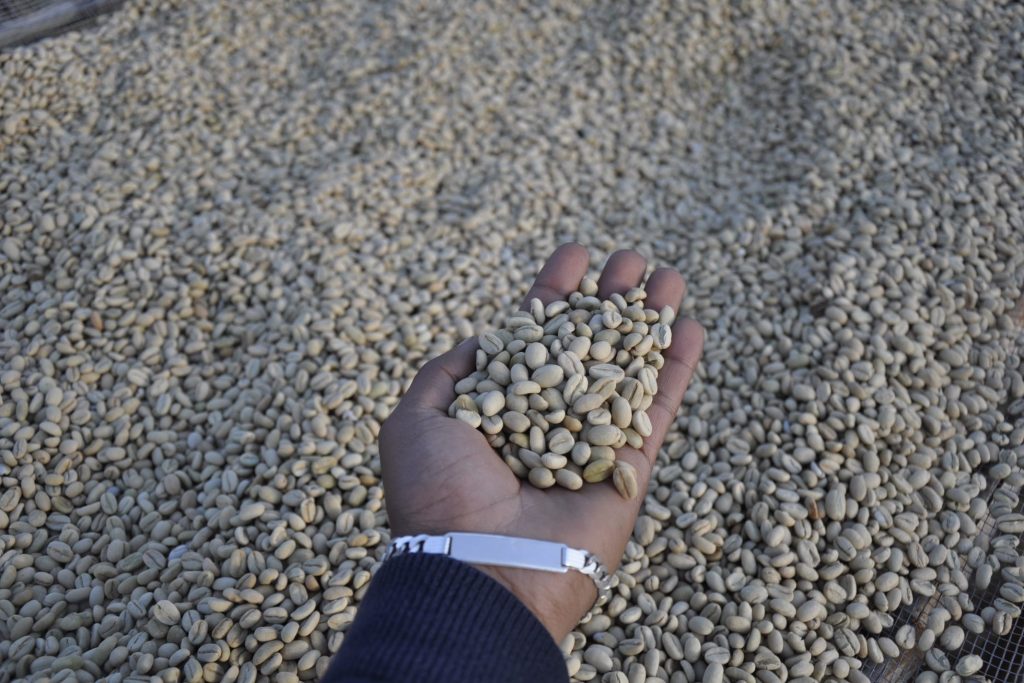
Hand holding dried green coffee above a raised drying bed

Coffee Crisis and the Birr

Market Insight Coffee Crisis and the Birr A small window into how the current coffee price crisis has a real effect, not only on the lives of millions of farmers in producing countries, but on the economies of those same countries and the lives of millions of their citizens. By Pablo Martinez A Market Wreaking Havoc on Local Economies The market is wreaking havoc in the local economies of small countries that depend heavily on the hard currency generated by coffee exports. Like Ethiopia. Coffee generates a big chunk of the US dollars Ethiopia’s economy needs. The Birr Exchange Rate Today, the black-market rate for USD to Birr in Ethiopia has reached, if not surpassed, 43 birr per USD, while the official rate stands under 29 birr per USD. That’s a 50% premium. This time last year, with New York at 110 cts/lb, the black market was paying 34 birr per USD, a 26% premium over the official rate of 27.25 birr per USD. This reflects on the cost of everything in the country, from luxury cars to medicines, food, and the industrial inputs the country needs to keep its economy going. Why Coffee Is at the Center of It This dysfunctional exchange rate has a lot to do with coffee, the commodity we can’t live without, but that apparently we don’t want to pay too much for. “Coffee generates a big chunk of those US Dollars the country needs.” But the international market is paying around 78 cts/lb for Ethiopian natural coffees, the bulk of the country’s production, when the production cost for this coffee is 105 cts/lb. Who Absorbs the Loss? Of course, the situation is complex, and it is this “black market premium” that is helping protect farmers from the brunt of the price disaster. Farmers and middlemen still get paid around 93 cts/lb when they deliver this coffee to the Exchange. Exporters take the losses. They process this coffee, move it to Djibouti, and sell it at 78 cts/lb. Natural, sun-dried coffees make up the bulk of Ethiopia’s production. Sustainable? Source Ethiopian Coffee With Us From our own washing stations in Sidama, Yirgacheffe, and Guji, we follow every lot from ripe cherry to export. Explore our coffees, or tell us what you are looking for and we will keep you close to the season. Explore Our Coffees → Start a Conversation
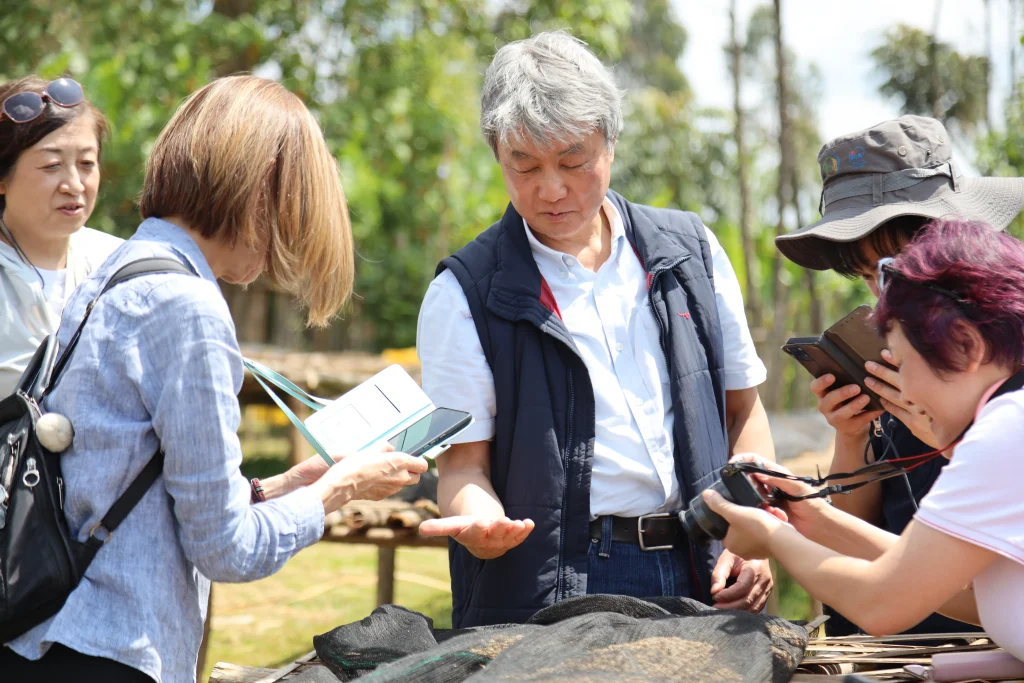
International visitors examining coffee at an Ethiopian washing station

EXCLUSIVE MARKETING ARRANGEMENTS

Coffee Trade Exclusive Marketing Arrangements Exclusive agreements between a coffee producer and an importer or roaster can bring stability and support, but they also carry real trade-offs. Here are the potential benefits and disadvantages for the producer. Potential Benefits for the Producer Exclusive agreements are usually long term, and as such they can help create price stability. Several advantages follow from that: Focus on the coffee. The expectation of premiums allows producers to focus on the coffee instead of the marketplace, and to pay for the extra effort it takes to maintain quality. Loyalty and communication. Exclusivity creates a sense of loyalty and communication between the producer and the importer or roaster that may otherwise not be possible. Technical help. It is in the best interest of the receiving company that quality is optimal, so it may provide technical help and other assistance that would otherwise not have been available to the producer. Technical support from a committed buyer helps keep quality where both partners need it. “Exclusivity creates a certain sense of loyalty and communication between the producer and the importer/roaster.” Potential Disadvantages for the Producer An exclusive arrangement may also limit the coffee’s exposure. Limited market reach. If the agreement is with a smaller company, or with companies with limited market share, the chance to create a broader consumer base is lost. Limited awareness when it ends. When the agreement comes to an end, the producer may be left with a coffee that enjoys only limited awareness and requires further effort to build market share. No guarantee of promotion. The producer relies on one or a few companies to promote the coffee, but generally has no guarantee that this will happen, or that it will be enough to be effective. Even though it is in the buyer’s best interest to ensure this, he or she may in fact not do so. Wider exposure brings more buyers to see and taste the coffee at origin. Work With a Partner at Origin From our own washing stations in Sidama, Yirgacheffe, and Guji, we follow every lot from ripe cherry to export. Explore our coffees, or tell us what you are looking for and we will keep you close to the season. Explore Our Coffees → Start a Conversation

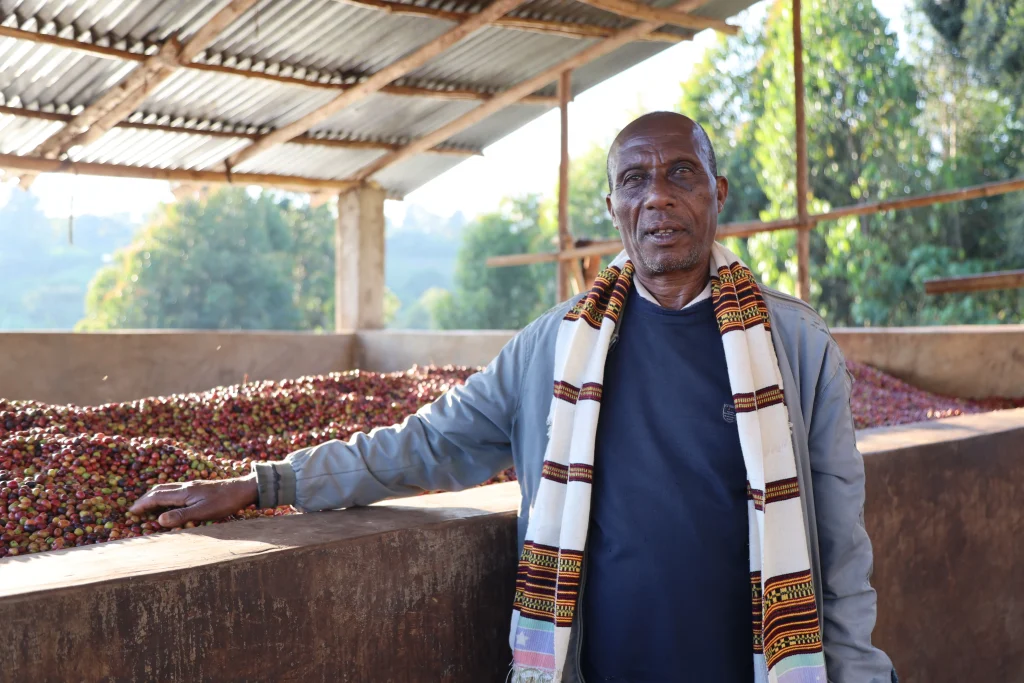
Farmer standing beside raised beds of drying coffee cherries

Coffee Producers to International Markets

Coffee Origins Coffee Producers to International Markets The profile of Ethiopian coffees varies based on a number of factors, including variety, process, and micro-region. Understanding what “specialty coffee” really means is the first step to reaching international markets. What Shapes the Profile of Ethiopian Coffee The profile of Ethiopian coffees varies based on a number of factors, including variety, process, and micro-region. The genetic diversity of Ethiopian coffee, said to hold 99% more genetic material than coffee in the entire rest of the world, is what makes it different and gives it nearly legendary status. Explore the regions behind our coffees: Sidama, Yirgacheffe, and Guji. Where “Specialty Coffee” Comes From The term “specialty coffee” originated in the United States. It was initially used to describe the range of coffee products sold in dedicated coffee shops, in order to differentiate these coffees from coffee generally available through supermarkets and other retail outlets. “Specialty coffee has become a generic label covering a range of different coffees.” It is fair to say that “specialty coffee” has become a generic label covering a range of different coffees, which either command a premium price over other coffees or are perceived by consumers as being different from the widely available mainstream brands of coffee. Specialty buyers increasingly come to origin to cup and choose their coffees. Bring Ethiopian Specialty Coffee to Your Market From our own washing stations in Sidama, Yirgacheffe, and Guji, we follow every lot from ripe cherry to export. Explore our coffees, or tell us what you are looking for and we will keep you close to the season. Explore Our Coffees → Start a Conversation