Uncategorized

Empowering Women in 2025/2026 Harvest Season

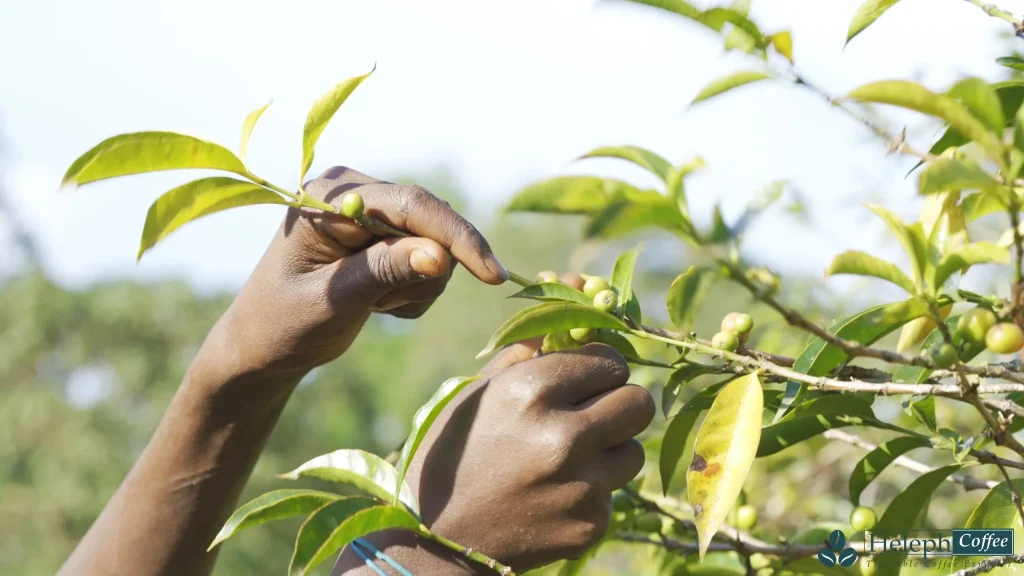
For us, women’s empowerment isn’t only about recognizing their work, but it’s also about supporting their lives. At Heleph Coffee, the 2025/2026 harvest season isn’t just about fresh cherries and new lots. it’s about honoring the women whose hands shape the journey of our coffee from farm to export. Their presence is felt in every washed, natural, Anaerobic or honey lot we produce. And this year, their impact feels stronger than ever. Across Sidama, women are the heartbeat of the harvest. You’ll find them carefully picking the ripest cherries, spreading parchment coffee on raised beds under the warm sun, and sorting each bean with incredible attention to detail. Their quiet precision, patience, and deep understanding of the process are what give Heleph coffees their clean, sweet, and consistent profile. women are at the heart of everything we do. Many are the main providers for their families, so we ensure fair wages, stable work, and real opportunities to grow. We invest in continuous training from sorting and quality control to advanced processing, helping women step confidently into leadership roles at our sites. We also encourage their involvement in cooperatives and community groups focused on savings, clean water, and family support. By supporting their skills, voices, and well-being, we help women thrive, and when they thrive, entire coffee communities grow stronger.

Limmu coffee

Ethiopia has a wide variety of Arabica coffee beans. Limmu is not the most known but instead produces excellent coffee. Limmu coffee originates from the southwestern parts of Ethiopia, in the Oromia Region. Such coffees are grown at altitudes of up to 2000 meters above sea level. They show a cup profile with a medium body and flavor notes of wine and fruit with sharp, citric-like acidity and a clean finish. Acidity: Low but sharp. Body: Well balanced. Bean color: greenish color Aroma: Mixed berries, spice, cocoa. Flavor: Chocolate, spicey, pleasantly sweet with floral overtones. Bean: medium in size and has a distinctive rounded shape. Washed Limmu coffee are a moderately recent phenomenon in the Ethiopian coffee market. Down the generations, coffees in these areas were produced as sun-dried coffees. To protect the final quality and consistency, washing these coffees was popularized relatively recently and successfully. Before the large-scale beginning of cooperatively owned washing stations, farmers would dry their coffees on the ground and store the coffee in their houses till they needed some money. At that moment, the producer would bring the dried cherry to a buying station and get the little money they needed. The issue was that these coffees earned the farmer lower prices due to the lower quality of what was known as Jimma coffees. As cooperatives opened washing stations, the coffees started earning a higher income for farmers right away. As a result, quality improved, and better prices for the farmers followed. The rise of Washed Limmu coffees presented a new region of premium coffees for the specialty roaster to explore and share with their customers. Still, it also introduced a newly afforded livelihood for the producers in Western Ethiopia.

Types of Coffee Beans

Within the Coffea genus, there are two major species of coffee beans. The considerable typical and economically suitable are Arabica and Robusta coffee beans, which make up over 90% of global coffee production. What makes each coffee bean type unique, and how to choose the most suitable coffee beans?  Arabica  Arabica coffee makes up most coffee grown, accounting for approximately 60% of retail coffee production. It originated in Ethiopia, where it grows wild. Nevertheless, people first cultivated it in Yemen, and it is from there, it takes its name. Characteristics Of Arabica Coffee Beans Arabica coffee beans are the best globally, favored for creating unique, gourmet coffee blends. Arabica beans have sweeter and more complex flavors than Robusta coffee beans, so they presently loom coffee markets, especially speciality coffee markets. These beans have a sugary nuance to them, which provides a naturally sweeter profile. Furthermore, they provide soft, gentle tones. As a result, Arabica presents a broader and more refined spectrum of origin flavors, such as nutty, chocolaty, and fruity, than any other coffee bean. They have a naturally higher PH balance that gives them bright and fruity flavors. Arabica coffee has a larger size than other beans and an elliptical shape. Coffea Arabica plants are sensitive to their environment.  They do best at more high elevations, with plenty of rain, well-draining soil, natural shade, and minimal temperature variations. Specifically, they thrive in volcanic environments, which offer all of the above and mineral-rich soils. It can be difficult and resource-intensive to grow Arabica coffee beans in environments that do not naturally meet those criteria. Arabica Varietals As the most popular coffee bean, Arabica has many varieties (also known as varietals). Some of my resources reported as many as 40 different varietals. The most common types are: Batian is a high-yield variety resistant to coffee leaf rust and berry disease. Bourbon produces a very high-quality cup of coffee and features very red and rich coffee berries. Casiopea typically produces a high yield and thrives in areas above 4,265 feet (or 1,300 meters). Robusta  Robusta is the second numerous naturally grown type of coffee bean. Robusta’s name comes from being more robust than the Arabica plants so that they can grow it in a broader range of environments. Thus, it is less inclined to disease. Nevertheless, despite these advantages, it remains less popular than Arabica because its flavors and aromas are not as desirable. Characteristics of Robusta Coffee Beans Robusta beans are known for having a darker, earthier flavor, and for this reason, they are most often subjected to a darker roast to better match their natural character. Robusta beans also have nearly twice the caffeine of Arabica beans. High-quality Robusta can produce a thick and surprisingly smooth texture, perfect for espresso blends. But overall, its flavor profile has been compared subtly to burnt rubber. A good quality Robusta bean can have immense depth and a balanced flavor to Arabica blends. Robusta beans are most valuable when prepared as espresso. Most espresso blends contain at least some percentage of Robusta beans. They create a richer crema than Arabica beans. Their inherently dark and earthy character is the perfect foil for sweet steamed milk in drinks like lattes and cappuccinos, where the subtleties of an Arabica bean would be lost. Robusta Varietals Robusta doesn’t have numerous varietals because it’s not as high in demand as Arabica. Many blend the two types of beans to produce a hybrid. This step helps to cut back on the intensity of the Robusta bean and makes their coffee a bit more enjoyable. Options like Kopi Luwak, Icatu, Rondonia beans, and a few other options. How to Choose Coffee Beans When picking the coffee  beans you want to buy. There are many factors to consider. Thousands of coffees are on the market, and no two are alike. So it can be challenging to select just the right one to suit your taste. These tips will assist you in narrowing it down. Understanding The Broad Varieties Understanding the different varieties of coffee is critical when choosing a type of coffee. There are many ways to categorize coffee: by type, by flavor profile, by roast level, by caffeine content, by grind, by additives, and so on.. Knowing Your Preferred Taste Each coffee bean can produce various flavors depending on its type, processing methods and roasting. If you prefer naturally sweeter coffees with a light body and bright acidity, then Arabica beans are the only way to go. They are characterized by various flavors, including fruits, florals, nuts, and chocolate. On the other hand, if you prefer more bittersweet and earthier tasty coffees with a heavy body, Robusta coffees are all excellent options. Determine The Amount Of Caffeine You Want  Not all coffee beans are equal in caffeine amount, so knowing how much caffeine you want is perfect to decide which coffee to buy. Arebica coffee beans have the lowest caffeine content, about 1.61 g/100 g, and Robusta is the most caffeinated lot, with 2.26 g/100 g. Evaluate Health benefits Arabica coffee beansare naturally sweeter than Robusta coffee beans. The Arabica coffee’s sweetness is anotheraspect it is considered more healthful. If you’re looking to avoid added sugars in your diet, you may benefit from the inherent sweetness of an Arabica coffee, while you might be more willing to add sugar to a bitter Robusta brew.

Ethiopian Coffee profile

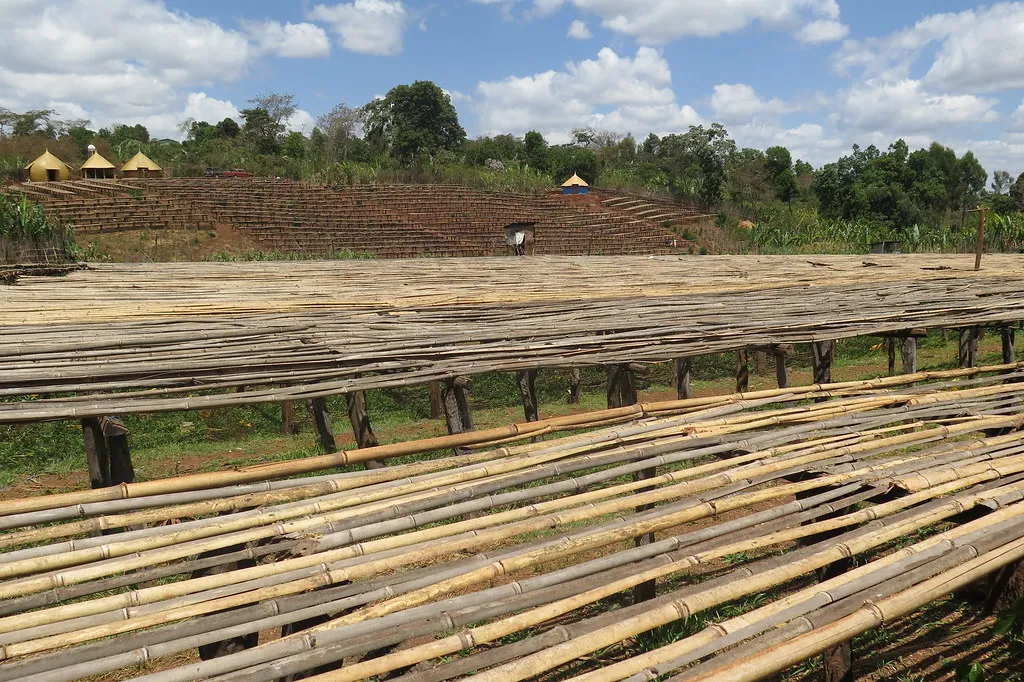
Ethiopian coffee is known for being bright and citrusy with high acidity. It’s light-to-medium-bodied and offers a complex-yet-delicate tasting experience. Ethiopian coffee beans are processed using both the wet/washed and dry/ natural methods, and each imparts different flavors on the final roast. Few countries showcase the wide range of other flavors that Ethiopian coffee does, which is a testament to our coffee culture. What are the most famous producing regions? These unique beans have become so admired around the world. Ethiopian Yirgacheffe Coffee Processing Types: Natural, washed Growing Altitude: 5,900-6,250 feet (1,800-1,900 meters) Harvest: October-January Availability: January-December This variety is harvested from the higher elevations of Ethiopia’s Sidama region near YirgaChefe. Ethiopia Yirgachefe is typically wet-processed, meaning that it’s mostly washed. Yirgachefe variety is primarily considered to be the pinnacle coffee crop of Ethiopia. Ethiopian Sidama Coffee Processing Types: Natural, washed Growing Altitude: 4,900-7,225 feet (1,500-2,200 meters) Harvest: October-January Availability: January-December The revered Sidama region is located in Ethiopia’s central highlands. This area is most likely where coffee originated. This bean is also wet-processed and dry-processed. At these elevations, the growth rate slows, allowing the coffee to absorb more nutrients, creating a more robust and bright palate.  Ethiopian Limu Coffee Processing Types: Washed Growing Altitude: 3,600-6,225 feet (1,100-1,900 meters) Harvest: October-January Availability: January-December The Limu region is west of the capital, located centrally in Ethiopia. This variety is also a wet-processed coffee and tends to be sharper than other Ethiopian coffees, which some people strongly favor. HOW is ETHIOPIAN COFFEE BEANS PROCESSED?  It is processed either by washing or drying methods.   WET PROCESSING  In this method, the cherries are placed in water for sorting, and the dense cherries float while the denser ones sink. Eco pulpers are then used to remove the skin to get the parchment. After this, the mucilage is removed by keeping the parchment coffee in a fermentation tank for days.  Once the fermentation is over, the coffee is placed in a soaking tank for 12 hours and then put on patios or a raised drying bed to dry for two or more. Then, they sort through the dried coffee, remove the damaged ones, and send the good ones to a warehouse for dry processing. Lastly, they are packaged and ready to sell. SUN DRYING  Here, the cherries are sorted by hand to remove the ripe, quality ones. Then they are placed on patios or raised drying beds made of wood (covered in nylon netting or burlap) and placed under the sun for weeks to dry. After this, they are milled to remove the husk and ready for sale.

Unique Ethiopian Coffee

It is sometimes called the Roof of Africa due to the height and largest continuous elevation area on the continent. Danakil Depression, Lake Tana, and Great Rift Valley are some of the astonishing landmarks that you will find in Ethiopia. But aside from these thrilling facts, do you know what made Ethiopia famous? Coffee. Keep reading to learn all about Ethiopian coffee. What is so Special about Ethiopian Coffee? Ethiopia has supplied some of the world’s best-reviewed single-origin premium coffee beans for hundreds of years. The Arabica plant is native to Ethiopia, and according to legend, it was first discovered by a goat-herder who noticed his flock getting energized after eating berries from this plant. Although this story wasn’t recorded till 1671, it’s still a romantic story, fitting for the discovery of the world’s favorite beverage. Ethiopia is currently the 5th largest coffee producer in the world, accounting for 3% of global coffee production and is the leading coffee grower in Africa. Half of the Ethiopian coffee beans are consumed locally, while the rest are exported to the EU, East Asia, and North America. Most Ethiopian beans are single-origin and known for their floral and fruity flavors with high acidityand balanced body.  More Genetics More FLAVORS With this history in mind, it’s suddenly a lot easier to understand why Ethiopian coffee is so unique. While the rest of the world’s coffee, to some extent, is derived from the few plants that were stolen from Yemen back in the day, there is a significant genetic variation among the coffee plants in Ethiopia. It’s anticipated that more than 90 per cent of the genetic material of Coffee Arabica is located in just that one country. Therefore, you can find more variation in flavor in Ethiopian coffee than anywhere else. Unique Character of Ethiopian Coffee Beans Ethiopian coffee beans are known for their complexity, pungent aroma, winey quality, and distinct acidity. It is believed to be one of the best coffee globally because the coffee is grown in high altitudes and near-perfect climate conditions. Cultivated in mountainside farms with an elevation between 1500 and 2200 meters (5000-7200 feet) above sea level. 90% of Ethiopian coffee is hand-picked in forests or small plots of land, and just 10% of the coffee beans come from commercial farming.  Still, Coffee in Ethiopia grows ‘wild’ and is picked just like mushrooms and blueberries from the wild. Ethiopia wild coffee is mixed with hundreds of varietals combined in one bag and cannot be separated again. Most coffee farms in Ethiopia grow the heirloom variety of ‘Coffee Arabica,’ the ‘queen’ of all coffees.

Ethiopian Coffee – Single Origin & Traceability

Ethiopia, popularly known as the birthplace of Arabica Coffee, today accounts for 3 % of the coffee grown worldwide.  The main coffee growing regions are Lekempt, Jimma, Limmu, Sidamo, and Yirgacheffe.  It is quite interesting to note that more than 70% of the Ethiopian population consists of farmers. Forest, Semi-Forest, Garden and Plantation Coffees are the three main production systems that have contributed to the growth of the coffee industry in Ethiopia. Generally, coffee beans are harvested from November to February every year.   Research studies suggest that Ethiopia’s annual Arabica production is projected to increase from 420 thousand tons in 2014/15 to 1103 thousand tons by 2019/20, of which 4.5 million small landholder farmers produce the highest i.e., 95%. Favourable topography, low disease and pest pressure, ample rainfall in coffee-growing areas are some of the key factors that influence the quality of Ethiopian Coffee beans. Coffee Gateway to the Middle East, US & Europe Ethiopia’s geographical positioning, sharing land borders with Djibouti (the main shipping port) makes it the gateway to the rest of the Middle East and the Western world. Today, Ethiopia is the largest coffee exporter in East Africa. Coffee accounts for 27-31% of the total commodity exports of the country. Single origin specialty coffee is the most sought after range due to its distinctive taste and quality. In the year 2018/19, Ethiopia exported 47,519 metric tons of coffee to Saudi Arabia, 42,215 MT to Germany, 33,824 MT to Japan, 24,080 MT to USA, 17,921 MT to Belgium and 13,059 MT to Sudan. According to experts, domestic coffee consumption in 2019/20 is estimated to be 3.14 million bags (188,400 metric tons), 50,000 bags less than in 2018/19. This decline may be attributed to social distancing measures put in place in response to COVID-19, which has resulted in lower domestic consumption at informal outdoor coffee stands. Post pandemic,  Ethiopia coffee consumption in MY 2020/21 will reach 3.4 million bags, an increase of 260,000 bags (15,600 metric tons) over the 2019/20 estimate. It is estimated that the consumption levels will return to normal in 2021. Innovative Coffee Traceability System In 2015, the IBM-enabled system was first introduced as a pilot project in the Ethiopian coffee industry and is successfully being implemented till date with the aim of increasing global exports of high-quality Ethiopian coffee. The unique system, known as eATTS helps trace the origins of Ethiopian beans right from picking until processing and packing. The innovative coffee traceability system is not only beneficial for international buyers and coffee-roasters, but it even encourages Ethiopian smallholder farmers to use cultivation and harvesting best practices. The Ethiopia Commodity Exchange (ECX) classifies all the coffee exported from Ethiopia. In addition to this, the Ethiopian Coffee and Tea Marketing and Development Authority together with Coffee Quality Inspection Center certify all coffee exported from Ethiopia. Excerpts of the interview with Mr.Tsegab Ayele, General Manager – Heleph Coffee Export 1.What makes Ethiopian coffee unique? Ethiopian coffee has complex flavors and is traceable back to the ground. The Coffee Arabica produced in Ethiopia is cultivated at very high altitudes between 1900 to 2400 ft above sea-level. Our coffee plants are free from pesticides and harmful fertilizers, instead, we make sure to use only organic compost.  These factors make Ethiopian coffee priceless. 2. How much coffee do Ethiopians drink on an average? We drink as much as 5 cups or more per day, which means more than 60% of the coffee produced is consumed locally. Coffee is an important part of Ethiopian culture. We have a unique coffee ceremony which  involves roasting coffee beans and preparing boiled coffee in a vessel called Jebena. The coffee ceremony is considered to be the most important social occasion in many households. 3. As an exporter of coffee what are the main challenges you face in the market? Delays in harvest due to unfavorable weather conditions is one of the main challenges faced by us. Secondly, the presence of middlemen in coffee value-chain is affecting prices in the market. 4. What is the effect of the current Coronavirus Covid-19 pandemic on the coffee industry in Ethiopia? The Covid-19 pandemic has negatively affected the coffee industry for nearly 2 months. Delay in coffee processing due to nationwide lockdown and at the supply chain system led to a pause in our domestic and export business. However, the Ethiopian government is supportive and hope the situation will improve soon. Shruti Arun

Sidamo Coffee

• Altitude of up to 1550 – 2200 • Produced washed and exceptionally unwashed coffee • Cup: fine acidity, medium body with spicy • Has: small to medium sized beans, Greenish • Blended for gourmet or specialty coffee Sidama Zone is a zone in the Southern Nations, Nationalities, and Peoples’ Region (SNNPR) of Ethiopia. It is named for the Sidama people, whose homeland is in the zone. Sidama is bordered on the south by the Oromia Region (except for a short stretch in the middle where it shares a border with Gedeo zone), on the west by the Bilate River, which separates it from Wolayita zone, and on the north and east by the Oromia Region. Towns in Sidama include Hawassa,the capital of Sidama and SNNPRS, Yirgalem and Wendo. Sidama has a population of around 3.2 million in 2017 who speak the Cushitic language Sidama (also known as Sidamigna)[1]. Sidama Zone is located in Southern Ethiopia where finest coffee grows. Sidama coffee is mainly produced in Sidama zone, but it also includes coffee produced in the neighboring zones such as Amaro, Guji, Borena, Bale, Waliyta, Kambata, Gamo Gofa and South Omo zones. Sidama zone is the leading coffee producing and the largest supplier of washed coffee in the country. Sidama zone is well known for its production of garden (cottage coffee) that is grown in the garden and fertilized with organic nutrients. It produces world class washed coffee due to its ideal soil type, climate, altitude, rainfall and temperature, for the production of high quality coffee. Coffee is grown in the garden and planted at low densities, ranging from 1000 to 1800 trees per hectare. Garden coffee is fertilized with organic nutrients and is often intercropped with inset (false banana). Sidama coffee is known for its high quality across the world and has built a reputation over many decades. Sidama coffee is low yielding variety with the highest cup quality. Sidama bean is small to medium size, greenish gray color and it has balanced taste and fine flavor with distinct sweetness. It has fine acidity, good body and is always sold as specialty coffee. Traceable Information: Ethiopia, South Nation and Nationality Region, Sidama zone and Other Neighboring zones Sidama A: Benesa, Chire, Bona Zuria, Arrpressa & Arbigona Sidama B: Aleta Wendo, Dale, Chuko, Dara, Shebedino, Wensho, Loko Abaya, Amaro & Dilla Zuria Sidama C: Wolliata, Kembata & Timbaro Sidama D: Bale, Chole & Nansebo Sidama E: South Ari, North Ari, Melo, Denba Gofa, Geze Gofa, Arbaminch Zuria, Basketo, Derashe, Konso, Konta, Gena Bosa & Esera Variety: Indigenous Ethiopian Arabica Coffee Altitude: 1500 – 2,100 MASL Coffee Processing: Washed and Natural Harvesting Method: Hand picking Harvest Season: September – December Export Season: January – August

Guji Coffee

Guji is one of the zones of the Oromia Region of Ethiopia. Guji is named after a tribe of the Oromo people. Guji is bordered on the south by Borena, on the west by the Southern Nations, Nationalities, and Peoples Region, on the north by the Ganale Dorya River which separates it from Bale and on the east by the Somali Region. The highest point in this zone is Mount Dara Tiniro. Cities and major towns in this Zone include its administrative center,Nagele Borana. The Guji Zone was created in September 2002, when the upland woredas of the Borena Zone were split apart to create it. Guji coffee has been receiving a lot of attention from the specialty coffee world in the past several years, and for good reason.  Many privately owned washing stations have sprung up recently, in an area that has traditionally processed coffee using a natural (dry) method.  The quality of these washed coffees can be outstanding, which isn’t surprising considering the area’s close proximity to Yirgacheffe.  “Close” is relative speaking in terms of travel in Ethiopia, where 100 km can mean a 10 hour drive, but the variety of terrain and culture in that short distance is incredible. Guji is an administrative zone of the Oromia region of Ethiopia, which gained political definition in 2002.  Prior to that year, the Guji territory (named for the Guji tribe of the Oromo people) was a part of the Borena zone.  Guji Zone shares a border with the Southern Nations, Nationalities & People’s Region (SNNP,) which includes Gedeo Zone (where Yirgacheffe is located) and Sidama Zone. Despite being near to Yirgacheffe in location (as the crow flies,) we’ve seen a huge diversity of coffee profiles from Guji, ranging from the sweet lemon candy and floral tea you might expect from the area, to heavy green melon, peach and rose flavors.  The natural coffees from Guji can also be spectacular when cared for well, bringing syrupy fruit, marmalade, rosé wine and perfumed aromatics.

Yirgacheffe Coffee

Washed best highland grown coffee Recognized as a district character flavor Set apart for exceptional citrus and floral flavor Has fine acidity Cup: bright Acidity, medium body Altitude: 1770 – 2200 m Raw: uniform, thick, medium to bold, oval in shape and compacted About the Yirgacheffe region Yirgacheffe is actually part of the Sidamo region in southern Ethiopia, but its exquisite washed coffees are so well-known that is has been sub-divided into its own micro-region. This steep, green area is both fertile and high – much of the coffee grows at 2,000m and above. At first glance Yirgacheffe’s hills look thickly forested – but in fact it is a heavily populated region and the hills are dotted with many dwellings and villages’ growing what is known as ‘garden coffee’. There are approximately 26 cooperatives in the region, representing some 43,794 farmers and around 62,004 hectares of garden coffee. The production is predominantly washed, although a smaller amount of sundried coffees also come out of Yirgacheffe. Around 85 percent of Ethiopians still live rurally and make a living from agriculture; each family usually lives in a modest home (often a single round mud hut) and farms their own plot of land, where they grow both cash crops and food for their own consumption. In Yirgacheffe, coffee is one of the main cash crops – covering from half a hectare to 1.5 hectares (the latter is considered big). This is usually planted alongside a second cash crop – often a large-leafed tree used in making roofs for  (and also shade provider for the coffee) known as ‘false banana’. This looks like a banana tree but isn’t – instead its thick stem is used to produce both a nutritious flour and a fermented paste that are staple ingredients (particularly across southern Ethiopia).  There is only one main harvest a year in Ethiopia – this usually takes place in November and December across all of the country’s growing regions. There are, on average, 4 passes made during the harvest period, and, in regions that produce both washed and naturals, the last pass is used for the natural coffee. Washed coffees are then generally pulped on the same day that they are picked (usually in the evening/night), sorted into three grades by weight (heavy, medium and floaters), fermented (times vary – usually between 16 and 48 hours), washed and then usually graded again in the washing channels. The beans are then dried on African beds, where they are hand-sorted, usually by women.

Heleph Coffee Company grew in response to global pressure

Coffee is Ethiopia’s natural resource that has been a major source of export income and topped its sell abroad trade for a long time. It is also strongly linked with the socioeconomic values of the people for many years. However, the country has not adequately benefited from the sector due to various reasons. Over twenty five percent of the Ethiopian communities’ livelihood expenses are covered by coffee. As well, about fifty percent of the nation’s coffee production is consumed locally and affirming the strong relation with the communities’ daily life. In the same way, it is obvious that the country is the origin of Coffee Arabic’a and its bio genetic. It is also the first famous coffee exporter in the country.